
Relying on outdated methods to monitor time-sensitive medical shipments can put both patient safety and regulatory compliance at risk. For healthcare administrators and logistics managers in Quebec, the stakes are high when it comes to maintaining clear, real-time tracking for every delivery. By embracing advanced delivery tracking technologies, you gain precise control, reduce uncertainties, and meet strict regulatory standards essential for safe and compliant healthcare operations.
Table of Contents
- Defining Delivery Tracking Systems For Logistics
- Types Of Tracking Solutions In Healthcare
- How Real-Time Tracking Ensures Compliance
- Critical Security And Privacy Considerations
- Common Pitfalls And How To Prevent Them
Key Takeaways
| Point | Details |
|---|---|
| Integration of Technologies | Advanced delivery tracking systems use technologies like GPS, RFID, and IoT to enhance real-time visibility in logistics. |
| Importance of Compliance | Real-time tracking ensures adherence to healthcare regulations and quality control through continuous monitoring and automated reporting. |
| Addressing Security Challenges | Organizations must implement robust security measures like encryption and multi-factor authentication to protect sensitive medical data. |
| Avoiding Common Pitfalls | To enhance effectiveness, healthcare providers should automate data processes, improve communication, and regularly train staff on technology use. |
Defining Delivery Tracking Systems for Logistics
Delivery tracking systems represent sophisticated digital technologies that transform how logistics organizations monitor, manage, and optimize shipment movements. These advanced platforms utilize multiple interconnected technologies to provide comprehensive visibility into transportation processes, enabling healthcare administrators and logistics managers to track medical shipments with unprecedented precision.
Modern delivery tracking technologies integrate several key components to create robust monitoring solutions:
- GPS Tracking: Real-time geographic location monitoring
- RFID Technologies: Automated identification and inventory management
- IoT Sensors: Environmental condition tracking for sensitive medical materials
- Cloud-based Platforms: Centralized data collection and analysis
Real-time tracking technologies have revolutionized logistics by providing continuous updates about shipment status, location, and potential disruptions. For medical logistics specifically, these systems ensure critical samples, medications, and equipment remain traceable throughout their entire transportation journey.
The integration of multiple tracking technologies offers healthcare logistics professionals comprehensive insights into shipment movements. Supply chain efficiency improvements result from implementing these sophisticated tracking platforms, which reduce operational uncertainties and minimize potential delivery risks.
Pro tip: Always verify your delivery tracking system provides real-time alerts and comprehensive reporting capabilities to maximize operational transparency and patient safety.
Types of Tracking Solutions in Healthcare
Healthcare logistics requires sophisticated tracking technologies that support complex operational demands and regulatory compliance. These advanced tracking solutions encompass multiple technological platforms designed to monitor, authenticate, and manage medical supplies, equipment, and sensitive materials throughout their transportation and storage lifecycle.
Healthcare organizations can leverage several primary tracking technologies:
- RFID Systems: Automated inventory tracking and real-time location monitoring
- Barcode Technologies: Quick identification and documentation processes
- Blockchain Platforms: Secure, transparent supply chain documentation
- Cloud-based Tracking: Centralized data management and real-time reporting
- Artificial Intelligence Integration: Predictive logistics and automated decision-making
Healthcare logistics technologies provide comprehensive monitoring capabilities that ensure product safety, authenticity, and regulatory compliance across complex pharmaceutical supply chains. These systems enable healthcare administrators to track critical medical resources with unprecedented precision and reliability.
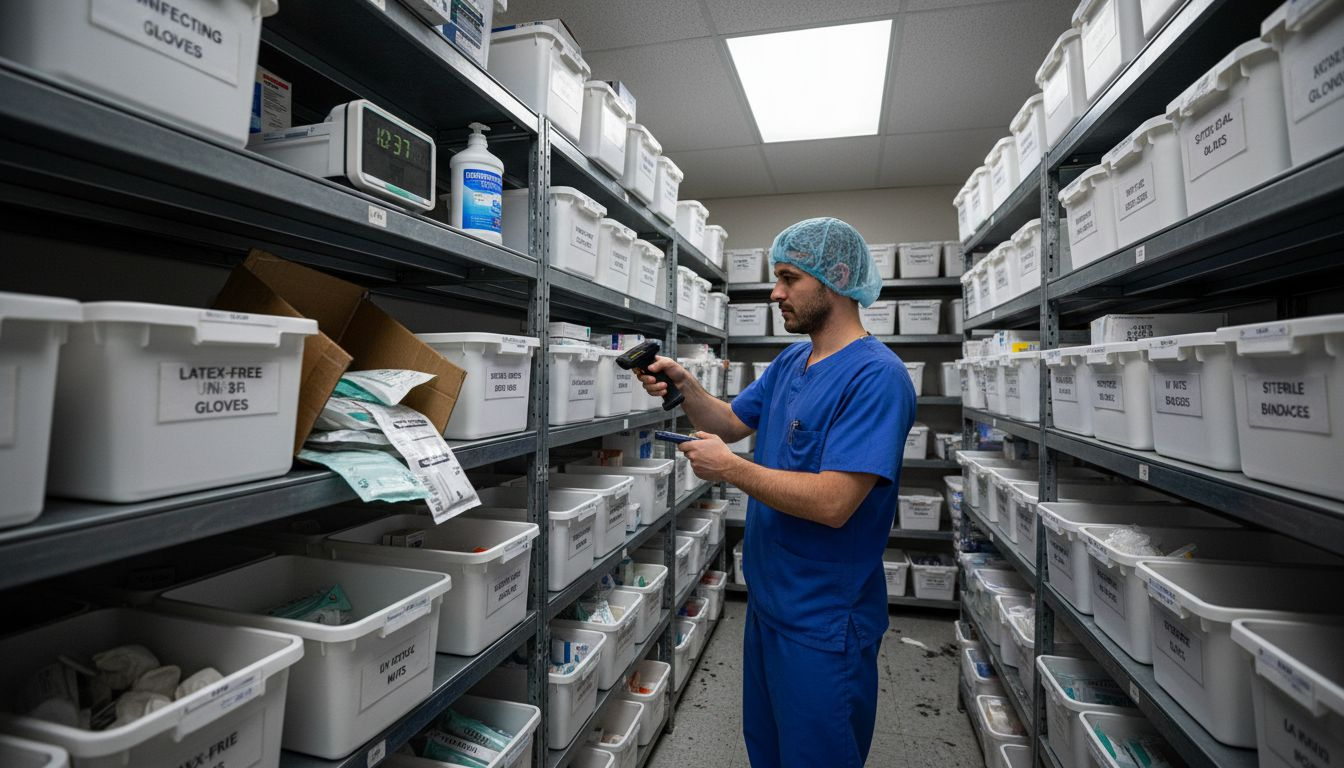
Moreover, AI-powered tracking solutions are transforming hospital resource management by integrating IoT and cloud computing technologies. These intelligent systems optimize inventory control, streamline logistics operations, and support improved patient outcomes through enhanced tracking and monitoring capabilities.
The table below summarizes how different tracking technologies benefit healthcare logistics:
| Technology Type | Main Benefit | Example Impact |
|---|---|---|
| GPS Tracking | Real-time location updates | Faster deliveries |
| RFID | Automated inventory checks | Reduced stockouts |
| IoT Sensors | Environment monitoring | Safer medications |
| Blockchain | Tamper-proof records | Improved compliance |
| AI Integration | Predictive analysis | Lower supply costs |
Pro tip: Evaluate your tracking solution’s compatibility with existing hospital infrastructure and its ability to provide real-time, comprehensive reporting before implementation.
How Real-Time Tracking Ensures Compliance
Real-time tracking technologies have become instrumental in helping healthcare organizations navigate complex regulatory landscapes and maintain rigorous compliance standards. These advanced monitoring systems provide unprecedented visibility into medical logistics processes, enabling administrators to demonstrate adherence to strict healthcare regulations and quality control requirements.
Compliance assurance through real-time tracking involves several critical mechanisms:
- Continuous Data Collection: Documenting every shipment movement and condition
- Automated Reporting: Generating instant regulatory compliance documentation
- Temperature Monitoring: Ensuring sensitive medical materials remain within prescribed ranges
- Chain of Custody Tracking: Maintaining detailed transportation records
- Instant Alerting: Identifying potential compliance risks in real-time
Real-time monitoring systems integrate sophisticated technologies like IoT, artificial intelligence, and cloud analytics to provide comprehensive compliance support. These platforms enable dynamic routing, precise demand forecasting, and continuous quality assurance crucial for meeting healthcare regulatory standards.
By leveraging intelligent tracking technologies, healthcare logistics managers can transform compliance from a complex challenge into a streamlined, data-driven process. The ability to collect, analyze, and report data instantaneously reduces human error, minimizes documentation gaps, and provides transparent, auditable records that satisfy even the most stringent regulatory requirements.
Pro tip: Implement a multi-layered tracking system that offers redundant monitoring capabilities to ensure uninterrupted compliance documentation.
Critical Security and Privacy Considerations
Healthcare tracking technologies introduce complex security challenges that demand comprehensive protection strategies for sensitive medical data. As digital monitoring systems become increasingly sophisticated, organizations must develop robust frameworks to safeguard patient information and maintain regulatory compliance across multiple technological platforms.
Key security and privacy protection strategies include:
- Encryption Protocols: Securing data transmission and storage
- Access Control Systems: Limiting information visibility to authorized personnel
- Audit Trail Maintenance: Documenting all data interactions and access attempts
- Multi-Factor Authentication: Preventing unauthorized system entry
- Secure Data Segregation: Isolating sensitive medical information
Healthcare privacy risks have dramatically increased with the proliferation of digital tracking technologies, highlighting the critical need for advanced security measures. Third-party tracking mechanisms and potential data breach vulnerabilities require continuous monitoring and proactive risk mitigation strategies.
Health information security controls must integrate advanced technologies like blockchain, IoT, and cloud computing while maintaining strict compliance with regulations such as HIPAA and GDPR. These comprehensive approaches ensure data confidentiality, integrity, and availability throughout complex medical logistics networks.
Pro tip: Conduct regular security audits and implement a comprehensive incident response plan to quickly address potential data vulnerability exposures.
Common Pitfalls and How to Prevent Them
Medical logistics tracking systems face numerous operational challenges that can compromise efficiency, accuracy, and patient safety. Understanding these potential pitfalls is crucial for healthcare administrators seeking to develop robust, reliable delivery and monitoring strategies.
Common tracking system vulnerabilities include:
- Manual Data Entry: Introducing human error and inconsistency
- Fragmented Communication: Creating information silos between departments
- Inadequate Technology Integration: Preventing seamless data flow
- Limited Real-Time Visibility: Reducing operational responsiveness
- Insufficient Staff Training: Undermining system effectiveness
Medical logistics tracking challenges often stem from reliance on outdated manual systems and poor inventory management practices. Organizations must proactively address these issues by adopting advanced technological solutions and implementing comprehensive operational improvement strategies.
Prevention requires a multifaceted approach that combines technological innovation, staff training, and continuous process optimization. Healthcare organizations should invest in automated tracking technologies, implement Lean Six Sigma methodologies, and create integrated communication platforms that enable real-time information sharing across different operational units.
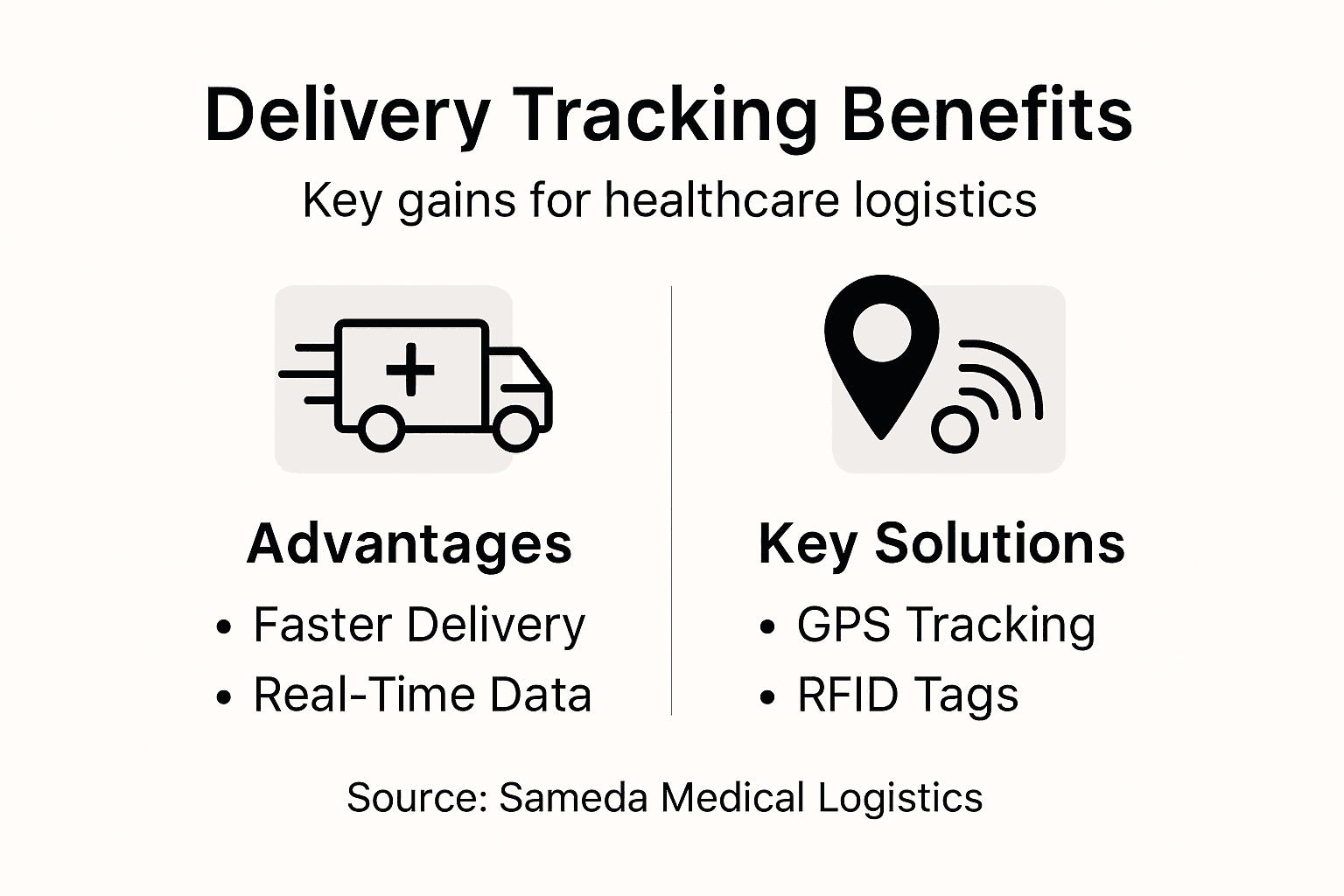
Here’s a comparison of common tracking system pitfalls versus modern prevention strategies:
| Common Pitfall | Impact on Operations | Prevention Strategy |
|---|---|---|
| Manual Data Entry | Inconsistent records | Automated barcode scanning |
| Fragmented Communication | Delayed responses | Centralized digital platforms |
| Limited Real-Time Visibility | Slow issue detection | Continuous tracking solutions |
| Insufficient Staff Training | System misuse | Regular cross-team training |
| Poor Technology Integration | Data silos | Unified tracking infrastructure |
Pro tip: Conduct quarterly system audits and cross-departmental training sessions to identify potential tracking inefficiencies and maintain operational excellence.
Enhance Your Medical Logistics with Reliable Delivery Tracking Solutions
Managing time-sensitive medical shipments demands exceptional precision and real-time visibility. The challenges highlighted in the article around maintaining compliance, reducing risks through automated tracking, and achieving seamless integration can be addressed effectively with trusted courier partners. Sameday Express Inc. specializes in secure, same-day and scheduled delivery services across key Canadian cities like Montreal, Ottawa and Toronto, ensuring your medical samples and equipment arrive on time and intact.
Key benefits include:
- 24/7 direct shipments for urgent deliveries
- Professional handling to maintain chain of custody
- Secure logistics supported by over 20 years of experience
Don’t let delivery uncertainties compromise patient safety or regulatory compliance. Discover how partnering with Sameday Express can streamline your healthcare logistics and provide the reliable tracking and fulfillment solutions you need. Visit Sameday Express today to secure your critical shipments with confidence.
Frequently Asked Questions
What are the main benefits of using delivery tracking in medical logistics?
Delivery tracking enhances the visibility and efficiency of shipping processes, ensuring that critical medical supplies remain traceable throughout their transportation journey, which minimizes risks and improves patient safety.
How do real-time tracking systems improve compliance in healthcare logistics?
Real-time tracking systems provide continuous data collection and automated reporting, helping healthcare organizations maintain regulatory compliance by documenting shipment movements and environmental conditions in real-time.
What types of tracking technologies are most effective for healthcare logistics?
Effective tracking technologies include GPS tracking for location updates, RFID systems for automated inventory checks, blockchain for secure documentation, and IoT sensors for environmental monitoring of sensitive materials.
What are common challenges faced when implementing delivery tracking in medical logistics?
Common challenges include manual data entry errors, fragmented communication, inadequate technology integration, limited real-time visibility, and insufficient staff training, which can compromise efficiency and patient safety.